







Yes, a person can usually hold dual citizenship in the United States. The short answer is yes, but the real question is whether the second passport was obtained in a way that does not break the other country’s rules. In this page, the focus is the practical answer for people who already have, or are about to get, a second nationality.
For many families, the confusion starts because US law does not offer a simple “dual citizenship” application. Instead, the issue appears through birth, descent, naturalization, or a later foreign passport. The question is then whether the result is compatible with the other country and whether any tax or reporting consequences need attention.
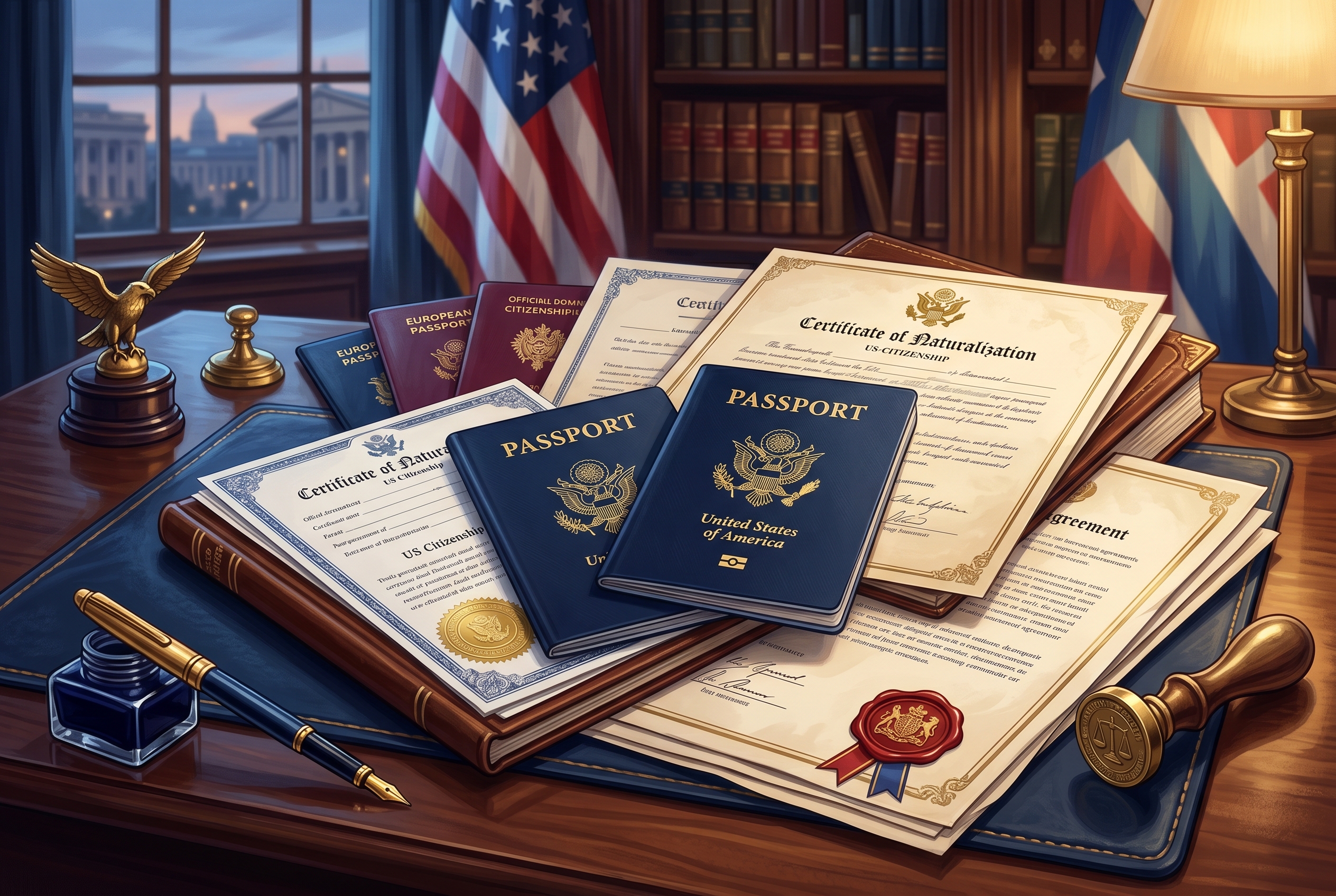
How it works when you already have two passports
The US usually does not force a person to choose between citizenships just because they hold more than one. That said, the person still has to follow US obligations, including tax filing and compliance rules where relevant. This page is about the lived reality of holding both statuses, not the broader legal policy behind them.
When we review a US dual citizenship case, we check the exact acquisition route first. Birth and descent cases often look different from naturalization cases. A foreign passport gained through investment, marriage, or residence can also have different consequences depending on the country involved.
What can go wrong after the second passport is issued
The common mistake is assuming that “the US allows it” means the file is automatically safe. It does not. A second country may not allow the same status, or the person may create tax, banking, or family complications without realizing it. In some cases the issue is not legality but timing and document order.
Another common problem is treating US citizenship as if it were enough by itself. If the foreign passport creates a conflict, the US side may be fine while the other jurisdiction becomes the real issue. That is why the answer always depends on both countries, not only the United States.
Who should review this carefully
Clients with global income, foreign assets, children with multiple nationalities, or a history of residence in more than one country should review dual citizenship before filing. The same is true for investors and people planning a second passport for long-term family security rather than travel alone.
If your case is still at the research stage, start with the dual citizenship hub and compare it with our US page. If you are weighing a second nationality for family or tax reasons, also review the citizenship by investment hub.
When you want a proper legal answer, contact us and we will check the route, the other country, and the side effects together.
Author
Reviewed by Anatoly Yarovyi, one of our citizenship lawyers.
Frequently Asked Questions
Can I keep both passports after naturalization?
Often yes, but the foreign country’s rules still decide whether the other passport survives.
Can children be dual citizens in the US?
Yes, often through birth or descent, depending on the family facts.
Is tax the main issue?
Often yes, but bank compliance and inheritance can matter too.
Is “having” and “getting” dual citizenship the same thing?
No. The route used to acquire it can change the legal result.
This article is for informational purposes only and does not constitute legal advice. For advice specific to your situation, please consult a qualified lawyer.